

SMS opt-in is a person’s clear agreement to receive a defined type of text from a specific business. For U.S. business messaging, the right consent depends on the purpose and sending technology: informational texts need permission tied to that purpose, while covered automated marketing texts require prior express written consent under the current FCC delivery restrictions.
The practical setup is straightforward. Tell people who will text them and why, record the agreement, send only what they expected, and make stopping easy.
SMS opt-in in a nutshell
- A phone number by itself is not blanket permission for every type of business text.
- Name the sender, message purpose, expected frequency, and opt-out path before someone agrees.
- Use a written agreement for covered automated marketing texts, with consent separate from the purchase.
- Save when, where, and how the person opted in, including the exact wording they saw.
- Treat STOP and any other clear request to stop as a suppression event, not as a customer-service note.
Before automating a message, map the trigger, permission record, and reply path. The verified VoxiSMS integrations show the available routes through Zapier, Make, and Voxiplan.
Start with the message purpose
The opt-in should match the texts that follow. CTIA’s current Messaging Principles and Best Practices separates business messaging into conversational, informational, and promotional contexts. That distinction gives small teams a useful way to avoid turning a service update into an unexpected sales campaign.
| Message context | Permission to establish | Example |
|---|---|---|
| A customer starts a conversation | Reply only with information responsive to that request | A customer texts to ask whether an order is ready; the business answers that question |
| Informational texts | The person agrees to texts for a specific purpose when providing the number | Appointment reminders, order updates, service-arrival notices, or account alerts |
| Promotional texts | Use express written consent before covered automated marketing messages | Subscriber offers, coupons, product promotions, or sales announcements |
Adding a coupon or sales prompt to an informational text can move it into promotional territory. Keep reminders and offers in separate message programs unless the opt-in language clearly covers both.
This is a U.S. operating baseline, not a universal rule set. The TCPA preserves room for certain more restrictive state requirements, as shown in the current U.S. Code at 47 U.S.C. § 227(f), and carrier or provider policies may add their own conditions.
What a clear SMS opt-in request should say
A good request answers the questions a person would ask before checking the box:
- Which business or organization will send the texts?
- What type of messages will arrive?
- Are the messages recurring, and how often should the person expect them?
- How can the person stop the messages or ask for help?
- Where can the person read the applicable terms and privacy policy?
CTIA also recommends identifying the originating number or short code and disclosing any associated messaging charges. The FCC definition of prior express written consent adds two important points for covered automated marketing: the agreement must clearly authorize the seller to send marketing messages to the stated number, and signing cannot be a condition of buying.
Example for promotional texts
Get recurring offers from [Business] by text at the number provided. Message frequency varies. Consent is not a condition of purchase. Reply STOP to opt out or HELP for help. Message and data rates may apply. [Terms] [Privacy]
I would place that copy beside an unchecked box, not inside general checkout terms. The person’s action, the wording, and the phone number should form one record.
Example for informational texts
Send appointment reminders from [Business] to this mobile number. Messages relate to appointments you book. Reply STOP to stop reminders.
The second version is narrower because the purpose is narrower. It does not quietly add offers, newsletters, or unrelated promotions.
Four practical ways to collect SMS opt-in
CTIA lists several valid operating patterns. Choose the one that keeps the request visible and gives you a reliable record.
Website or booking form
Place the SMS choice next to the mobile-number field. Keep it separate from email consent and show the message purpose before the person submits the form.
Text keyword
Invite the person to text a clear keyword to the business number. The sign, page, or receipt that presents the keyword should also identify the sender, program, recurring nature, opt-out method, and applicable terms.
Point-of-sale or on-site form
Use a dedicated digital or paper choice instead of treating a receipt phone number as permission. For marketing, capture the person’s affirmative written action and retain the version of the wording they accepted.
Customer-initiated request
When a person texts first, answer the request they made. Do not treat a support question as permission for a recurring promotional campaign.
Save proof of what the person agreed to
An opt-in list is more useful when each entry explains its origin. CTIA recommends retaining the consent timestamp, acquisition method, wording and action used, campaign, phone number, and an identifier for the person or session. For web forms, the record may also include the relevant IP address.
| Record field | What to save |
|---|---|
| Time | Date, time, and time zone of the opt-in |
| Source | Web form, booking flow, keyword, point of sale, or another documented method |
| Consent experience | Exact disclosure, checkbox or action, and the version presented |
| Message purpose | The campaign or operational use the person accepted |
| Recipient | Mobile number plus the customer, account, or session identifier used by the business |

If the form copy changes, keep the old version with the records created under it. A current form cannot prove what someone saw months earlier.
Send a useful welcome text
For a recurring program, CTIA recommends sending an opt-in confirmation before additional messages. It should name the program, explain how to get help and opt out, state that messages recur, describe the frequency, and disclose applicable messaging charges.
[Business]: You’re subscribed to [program]. Message frequency varies. Reply STOP to opt out or HELP for help. Message and data rates may apply.
The first text should confirm the agreement, not introduce a new purpose. If the person joined for appointment reminders, do not use the welcome message to add promotional offers.
Make opt-outs part of the workflow
The FCC’s current rule recognizes STOP, QUIT, END, REVOKE, OPT OUT, CANCEL, and UNSUBSCRIBE as reasonable reply-text methods for revoking consent. It also requires a sender to act on other wording when a reasonable person would understand it as a request to stop.
Covered requests must be honored within a reasonable period that does not exceed ten business days. Operationally, suppressing the number as soon as the request arrives is clearer and reduces the chance that a queued automation sends another message.
One final confirmation is permitted when it only confirms the opt-out and contains no promotion. A concise example is enough:
[Business]: You’ve been unsubscribed and will receive no further messages from this program.
The FCC’s 2024 consent order explains the reasonable-method standard, the processing window, and the one-time confirmation. CTIA’s guidance goes further as an operating practice by recommending multiple opt-out paths and discouraging rented, sold, or shared opt-in lists.
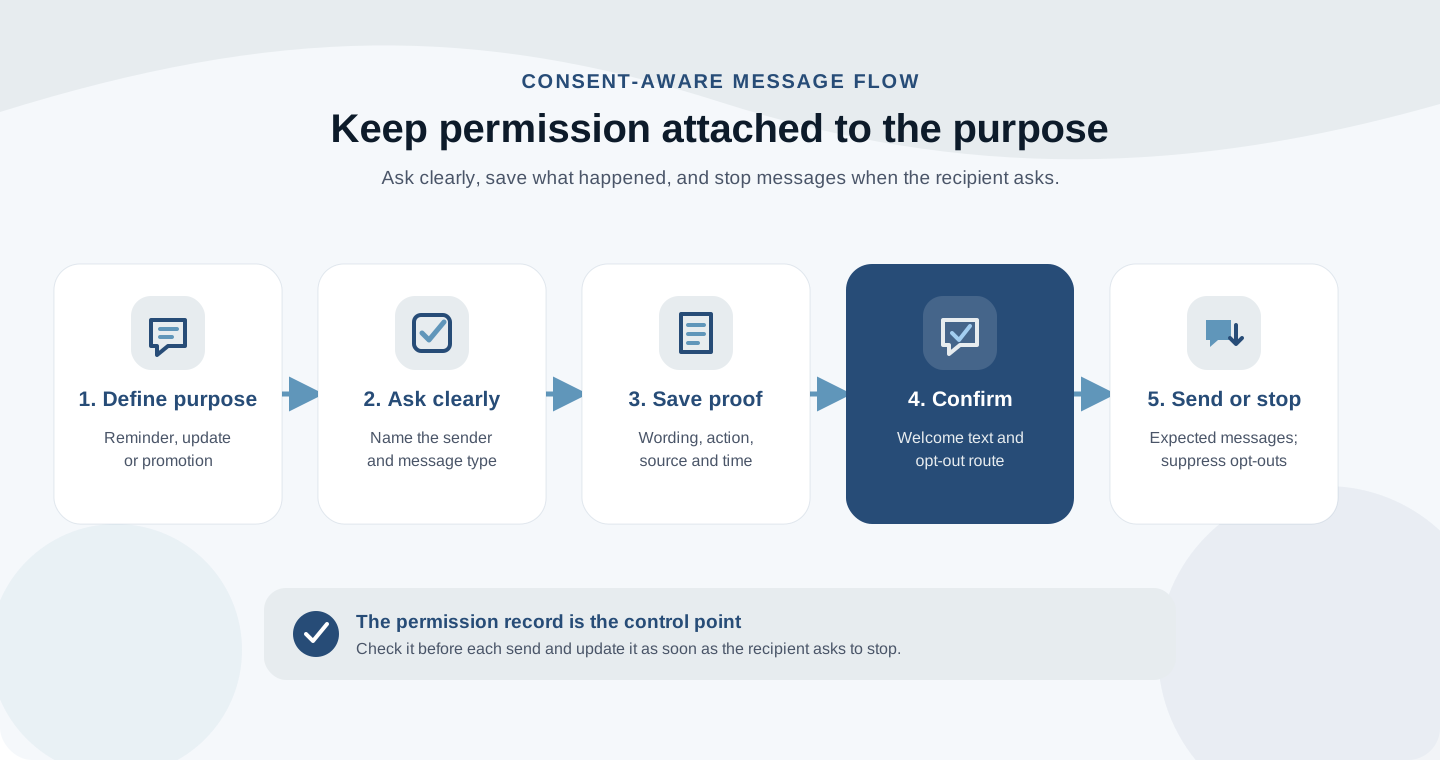
Use VoxiSMS after permission is in place
Consent belongs to the business and its message program, not to the sending tool. Using an Android phone and SIM does not turn an unexpected business text into a permitted one.
A practical VoxiSMS workflow looks like this:
- The source app captures the mobile number, purpose, and consent record.
- The automation checks that the contact is eligible for that message and is not suppressed.
- VoxiSMS sends through the connected Android phone, SIM, real number, and active mobile plan.
- Replies return to the phone and can flow back into the connected workflow for handling.
The VoxiSMS Zapier integration fits form, CRM, order, and support triggers. The VoxiSMS Make integration is useful when the scenario needs filters or routers before the send. For appointments, the VoxiSMS and Voxiplan integration connects reminders, confirmations, cancellations, and replies to the same operational path.
VoxiSMS adds no per-message fee of its own. The Android device sends through the mobile plan already active on the phone.
Ready to test with an internal contact who expects the message? Install VoxiSMS from Google Play, connect the Android phone and SIM, and verify both the outbound text and the reply path.
SMS opt-in launch checklist
- The sender is named before and inside the first message.
- Informational and promotional purposes are separated or described clearly.
- Marketing consent copy is visible and not bundled into a purchase requirement.
- The exact wording, action, number, source, and timestamp are saved.
- The welcome text matches the program the person selected.
- STOP and plain-language opt-out requests suppress future sends.
- Queued automations check suppression again before delivery.
- U.S. marketing programs account for applicable do-not-call requirements, state rules, and carrier or provider conditions.
Frequently asked questions
Does an existing customer automatically opt in to marketing texts?
No. A purchase or an existing phone number does not create the written agreement defined by the FCC for covered automated marketing texts. Ask separately and make the marketing purpose clear.
Is a checked box enough to prove SMS opt-in?
The box is only one part of the record. The disclosure must identify what is authorized and the number to be contacted, the action must qualify as a signature under applicable law, and the business should retain the wording, timestamp, source, and recipient record.
Can one opt-in cover reminders and offers?
Only when the request clearly describes both purposes and the applicable rules allow it. Separate choices are easier for people to understand and make it less likely that a service reminder becomes an unexpected promotion. CTIA recommends keeping an opt-in tied to the intended sender and campaign.
What should happen after someone replies STOP?
Suppress future messages covered by the request, process any already queued sends so they do not go out, and send at most one non-promotional confirmation. Do not require the person to use exact capitalization or punctuation.
Does VoxiSMS remove the need for consent?
No. VoxiSMS provides the Android and SIM delivery route. The business remains responsible for the message purpose, permission record, opt-out handling, and other rules that apply to its program.
