
Two-way SMS delivery
VoxiSMS sends from your Android phone and receives the customer's reply on the same mobile number. An inbound webhook can pass that reply into your automation.
This is the VoxiSMS layer.
Send business texts from your own Android phone and let customers reply to the same real number. VoxiSMS moves the SMS in both directions; your connected workflow decides the next useful step.

Quick answer
VoxiSMS is a two-way Android SMS gateway for businesses that want replies to feed an automation or shared team process. It sends through the phone's active SIM and real mobile number, then can forward inbound message content and the sender number to a supported webhook workflow.
A useful reply flow begins with a message that makes the available next steps obvious. Replace every placeholder and connect each offered reply before sending.
| Use case | First message | What the reply can do |
|---|---|---|
| Appointment confirmation | [Business]: Your appointment is [date] at [time]. Reply C to confirm or R to request a change. | Send C or R into the booking workflow, then confirm the action the workflow completed. |
| Order pickup | [Business]: Order [reference] is ready. Reply TODAY or TOMORROW so we can prepare your pickup. | Update the pickup note and alert the counter team with the customer's choice. |
| New enquiry | [Business]: Thanks for contacting us about [topic]. Reply 1 for a call, 2 for available times, or send your question. | Route a numbered choice to the matching path and send free text to the right person. |
| Service update | [Business]: Work on [reference] is complete. Reply PICKUP for collection details or HELP for a question. | Return the prepared details or create a follow-up task for the service team. |
| Team check-in | [Team]: Can you cover [task] at [time]? Reply YES or NO. | Record the answer in the source workflow and notify the coordinator. |
An SMS chatbot workflow needs both message delivery and response logic. VoxiSMS covers the Android and SIM delivery path. Zapier, Make, Voxiplan, or another supported step owns the decision that follows a reply.
VoxiSMS sends from your Android phone and receives the customer's reply on the same mobile number. An inbound webhook can pass that reply into your automation.
This is the VoxiSMS layer.
Zapier or Make checks a known reply such as YES, NO, C, or HELP, updates the business record, and runs the next approved step.
Best for predictable choices.
A separate automation step can interpret open-ended text or draft a response before the workflow passes a final message back to VoxiSMS.
VoxiSMS does not include a built-in chatbot.
Keep the business record, SMS delivery, and reply handling as visible parts of one loop. That makes the workflow easier to test from the first trigger through the final update.
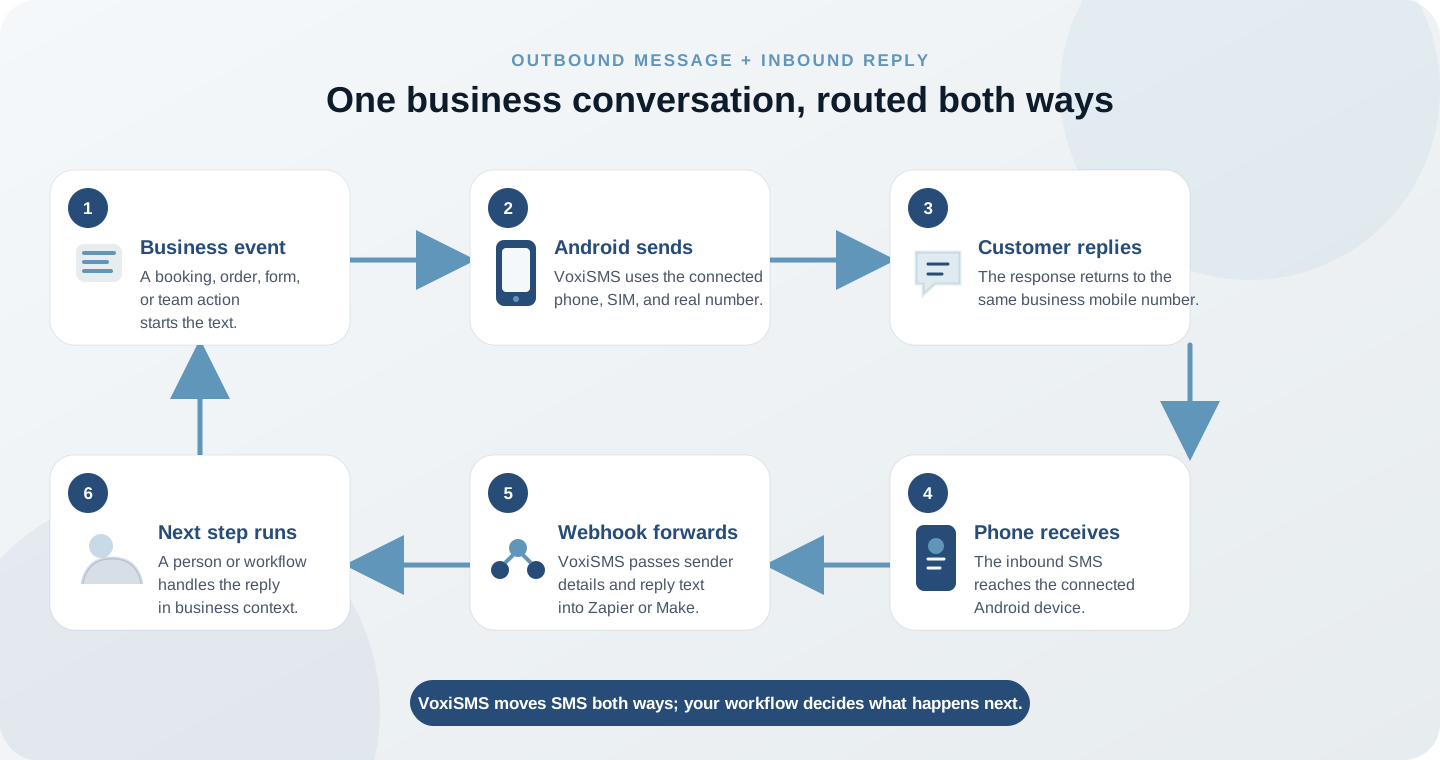
The VoxiSMS integrations hub explains the shared model: a workflow passes an outbound message to VoxiSMS, while an inbound reply can start a new webhook-driven run.
Use the same customer or business record on both sides. The sender number and reply content identify the inbound event; the workflow should add the relevant booking, order, lead, ticket, or task context before taking the next action.
The VoxiSMS Zapier integration handles outbound sending. For replies, Zapier's official Catch Hook documentation explains how a unique webhook URL receives and parses data from an external app.
Use the VoxiSMS Make integration as the outbound module. Make's official webhook guide documents custom webhook URLs that can receive data and trigger a scenario.
For appointment conversations, the verified VoxiSMS and Voxiplan workflow covers reminders, confirmations, cancellations, follow-ups, and inbound reply routing without turning VoxiSMS into the scheduling or chatbot layer.
Begin with a small conversation the business can complete consistently. Prove the outbound message, inbound webhook, record match, and next action before adding open-ended reply logic.
Pick a narrow outcome such as confirming an appointment, choosing a pickup day, or sending a question to the support queue.
Name the business, give the useful context, and offer only reply options that the connected workflow can handle.
Use Zapier, Make, or Voxiplan to pass the recipient and message to the Android phone selected in the VoxiSMS action.
Point VoxiSMS reply forwarding at a Zapier Catch Hook or Make custom webhook so the sender number and message content can start a new workflow run.
Match known keywords, route free text to a person or separate logic step, and keep the underlying order, booking, lead, or ticket as the source of truth.
Send from an internal number, reply with every supported option and an unexpected message, then confirm that the intended record changes before activation.
| Check | Practical test |
|---|---|
| Recognizable first message | Include the business name, the relevant event, and the next action so the reply has enough context. |
| Supported reply choices | Every keyword offered in the message should have a tested workflow path and a clear confirmation. |
| Free-text route | Decide where an unexpected or open-ended reply appears when no keyword rule matches it. |
| Source record | Use the sender number and workflow context to find the correct booking, order, lead, ticket, or task. |
| Outbound return path | When the workflow sends another SMS, keep the message tied to the same business context and real mobile number. |
Install VoxiSMS on an Android phone with an active SIM, connect the workflow that owns the business record, and run one complete conversation with an internal number.
How replies, webhooks, chatbot logic, and the Android sender phone fit together.
No. VoxiSMS handles SMS delivery through your Android phone and can forward inbound replies to Zapier or Make. Any chatbot, AI, keyword matching, or business-rule logic lives in the connected workflow.
Yes. Messages are sent from the real mobile number in the connected Android phone, so customer replies return to that number. VoxiSMS can forward the sender number and message content to an inbound webhook.
Create a Webhooks by Zapier Catch Hook trigger, copy its webhook URL, and use that URL for VoxiSMS reply forwarding. Test with an internal reply before adding filters or follow-up actions.
Create a custom webhook in Make, connect it to the scenario that should handle replies, and use the webhook URL for VoxiSMS reply forwarding. Map the sender and message fields from a test reply.
Yes. Exact keywords can follow predictable branches, while unmatched text can go to a person or a separate interpretation step. Do not offer a reply option unless its next action is already connected and tested.
VoxiSMS adds no per-message fee. The connected Android phone sends and receives through the mobile plan already active on its SIM.