VoxiSMS vs Twilio: costs, capabilities, and best fit
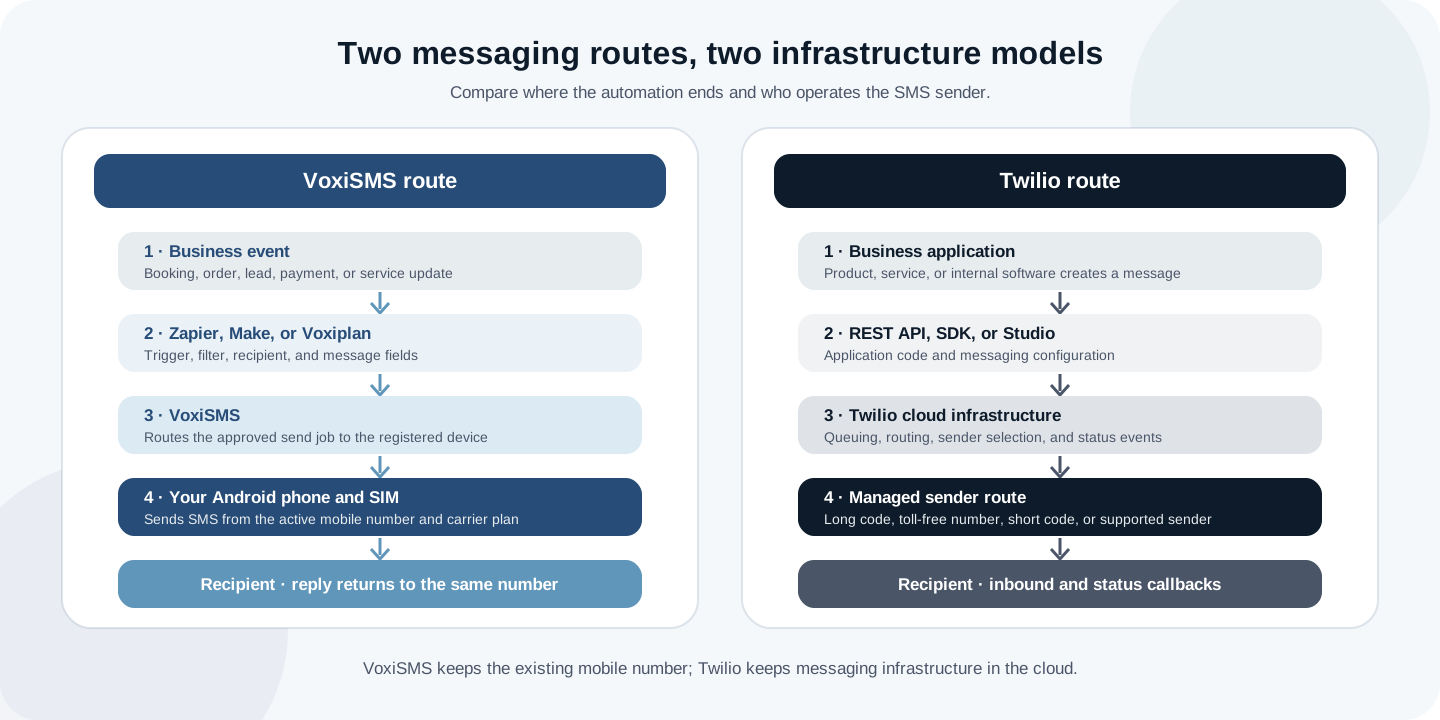
Both products can put SMS into a business workflow, but they use
different infrastructure. VoxiSMS turns your own Android phone and
SIM into the sender; Twilio provides a cloud messaging API and
provider-managed sender infrastructure.
VoxiSMS is a Twilio alternative for a specific job: moderate-volume
business SMS from a recognizable number using no-code automation.
Twilio is the broader developer platform for SMS, MMS, RCS, WhatsApp,
high-throughput delivery, and direct API control. The right choice
depends on sender identity, volume, channels, and who operates the
infrastructure.
Choose VoxiSMS for operational SMS from an existing mobile number through Zapier, Make, or Voxiplan.
Choose Twilio for a direct API, high throughput, more messaging channels, or provider-managed cloud infrastructure.
VoxiSMS costs $1 and adds no separate per-message fee; the Android phone, SIM, and carrier plan remain part of your setup.
Twilio charges by SMS segment, then adds carrier, number, and applicable registration or campaign fees.
Compare the whole workflow, not one headline price.
Provider-managed long code, toll-free number, short code, or supported sender
Infrastructure
A powered, connected Android device you operate
Cloud messaging infrastructure operated by Twilio
Setup path
Zapier, Make, or Voxiplan
REST API, SDKs, Twilio Studio, and Messaging Services
Channels
SMS
SMS, MMS, RCS, WhatsApp, and other messaging channels
Replies
Return to the same mobile number and can enter a supported workflow
Inbound messages and status events enter application webhooks
Pricing model
$1 flat plan, no additional per-message fee from VoxiSMS; carrier plan remains yours
Usage-based per segment, plus carrier, number, and applicable registration or campaign fees
Best fit
Moderate operational and transactional SMS from a number customers already know
Developer-led systems, high throughput, multiple channels, and broader carrier infrastructure
Scroll horizontally to view both routes →
Both routes automate SMS. The infrastructure boundary is different.
Current cost model
The cost models start from different infrastructure
VoxiSMS charges $1 for the product and sends through the mobile plan
already active on your Android device. If the phone, SIM, and suitable
plan are already in place, the incremental VoxiSMS product charge is
$1. If you need a dedicated device or another carrier plan, add those
costs before comparing totals.
VoxiSMS
$1
Flat product price with no additional per-message fee from VoxiSMS.
The Android phone sends through the carrier plan already active on
its SIM.
Existing mobile number remains the sender.
Phone, SIM, and carrier-plan costs remain yours.
Best compared as a complete device-and-workflow setup.
The current U.S. long-code price is
$0.0083 per outbound SMS segment. Published outbound carrier fees range from $0.0035 to $0.005 per
segment, and a leased long-code number is $1.15 per month.
A low-volume mixed A2P 10DLC campaign also carries a $1.50 monthly
campaign fee, plus $4.50 brand registration and $15 campaign vetting
according to
Twilio's current A2P fee guide.
A transparent 1,000-message example
This example assumes 1,000 U.S. outbound, single-segment SMS messages
on one Twilio long code, a low-volume mixed campaign, and no inbound
replies or optional add-ons.
Scroll horizontally to compare →
Twilio line item
Calculation
Cost
Base outbound SMS
1,000 × $0.0083
$8.30
Long-code carrier fees
1,000 × $0.0035 to $0.005
$3.50–$5.00
Leased long-code number
Monthly
$1.15
Low-volume mixed campaign
Monthly
$1.50
Monthly total after setup
Sum of the rows above
$14.45–$15.95
One-time registration
$4.50 brand + $15 campaign vetting
$19.50
Long messages can use more than one billable segment, inbound replies
add usage charges, and another campaign type changes the monthly fee.
This is a reproducible baseline, not a universal invoice.
Own-number operations
Where VoxiSMS fits better
VoxiSMS is the stronger fit when the sender number matters. A clinic
can send appointment reminders from its existing mobile number. A
service team can send arrival windows from the number customers
already call. An online store can send order updates without renting
a separate sender.
Keep the mobile number customers know
The connected Android phone sends from the number active on its SIM. You do not need to rent a separate SMS sender.
Use supported no-code automation
Start the message in Zapier, Make, or Voxiplan, then pass the recipient and message to the registered Android device.
Build focused operational workflows
Appointment reminders, order updates, lead follow-ups, and service messages fit the own-number route well.
Start the automation in
Zapier
or
Make. For appointment communication, the
Voxiplan integration
can trigger confirmations, reminders, cancellations, and reply handling.
With VoxiSMS, the Android phone is part of the delivery
infrastructure and stays powered, connected, and ready to send.
Test one supported workflow first
Use an internal number to check the sender, message, offline queue,
and reply path before moving a live operational workflow.
Twilio is the stronger fit when developers need direct control over
messaging infrastructure, higher throughput, or more than SMS.
Direct API and SDK control
Build messaging into a software product or backend with Twilio's REST API, SDKs, and application webhooks.
Cloud telecom infrastructure
Use provider-managed sender pools, routing, scheduling, and high-volume delivery patterns without operating a phone.
More messaging channels
Use SMS and MMS, then extend the same platform into RCS, WhatsApp, and other supported channels.
Twilio also exposes message status callbacks. Its
status callback documentation
describes transitions such as queued, sent, delivered, failed, and undelivered.
That control is useful when messaging is part of a larger software
product or when multiple markets and channels share one platform. Your
team builds and monitors the integration, uses approved sender
infrastructure, and pays the usage and registration charges that apply
to each route.
Decision guide
Choose by workflow, not headline price
Sender identity, technical ownership, channel requirements, and volume
change the answer more than one isolated price line.
Scroll horizontally to compare →
If you need...
Better starting point
Why
Appointment, order, lead, or service updates from an existing mobile number
VoxiSMS
Uses your Android phone and active SIM as the sender
A Zapier or Make workflow without a direct SMS API project
VoxiSMS
The supported integration handles the send step
A direct REST API or SDK
Twilio
Built for developer-led messaging applications
SMS plus MMS, RCS, or WhatsApp
Twilio
Broader channel coverage
High-throughput cloud delivery across markets
Twilio
Provider-managed telecom infrastructure
A focused appointment workflow through Voxiplan
VoxiSMS
Native appointment-message path
Start with one real workflow
Choose the trigger, send to an internal number, confirm the message
and sender, then test the queue and a reply. Neither route changes
the permission or carrier rules that apply to the message itself.
Short answers about replacement scope, current costs, sender numbers, APIs, and mixed setups.
Is VoxiSMS a direct replacement for Twilio?
No. VoxiSMS can replace the SMS delivery path for supported moderate-volume workflows. It does not replace Twilio's direct API, broader channel range, or high-throughput cloud infrastructure.
Which option is cheaper for 1,000 SMS per month?
If you already have a suitable Android phone and carrier plan, VoxiSMS adds a $1 product charge and no separate per-message fee. In the disclosed U.S. Twilio scenario on this page, 1,000 outbound single-segment texts cost $14.45–$15.95 per month after setup, plus $19.50 in one-time registration. Your carrier mix and mobile plan can change the result.
Can VoxiSMS send from an existing business number?
Yes, when that mobile number is active on the SIM in the connected Android phone. The phone sends the SMS through its current carrier plan.
Does VoxiSMS provide a direct SMS API?
No verified direct REST API is part of the current product. Use a supported VoxiSMS path through Zapier, Make, or Voxiplan.
Can one business use both VoxiSMS and Twilio?
Yes. A business could use VoxiSMS for recognizable local operational messages and Twilio for developer-led, high-throughput, or multi-channel traffic. Keep the sender, reply path, and message purpose clear for each workflow.
Use the Android route when the workflow fits
Install VoxiSMS, connect one supported automation, and test the send and
reply path from the mobile number your business already uses.